
Is Hydroxypropyl Methacrylate (HPMA) the same as HEMA?
Is hydroxypropyl methacrylate the same as HEMA?
Overview
No, hydroxypropyl methacrylate (HPMA) is not the same as HEMA (hydroxyethyl methacrylate), though they are both monomers used in similar applications. While both are used in products like nail gels and adhesives, they have distinct chemical structures and varying allergenic potential. HEMA is a known allergen, while HPMA is often presented as an alternative for those with sensitivities.
Here's a more detailed breakdown:
HEMA (2-Hydroxyethyl Methacrylate):
This is a common monomer used in various products, including gel nail polish, adhesives, and dental materials. It is known for its ability to create strong, flexible, and durable polymers. However, it's also a well-known allergen, with potential to cause skin irritation and allergic reactions.

HPMA (Hydroxypropyl Methacrylate):
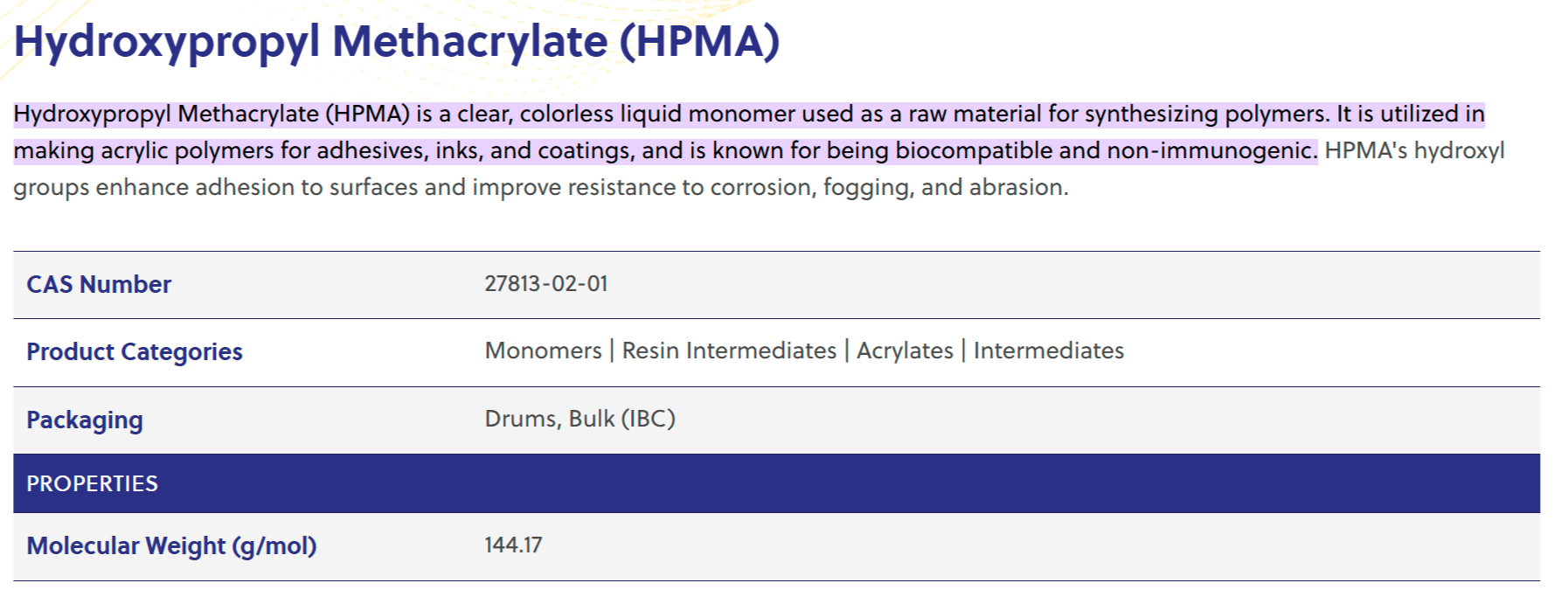
HPMA is another methacrylate monomer with similar properties to HEMA, such as providing strong adhesion and durability. It's often used as a substitute for HEMA in products, especially for individuals who are sensitive to HEMA. While HPMA is also a monomer, it is not as widely recognized for causing allergic reactions as HEMA.

Key Differences:
The primary difference lies in their chemical structure, with HPMA having a hydroxypropyl group instead of the hydroxyethyl group found in HEMA. This difference in structure can affect how the monomers behave in the body and how they interact with skin, leading to different allergenic potentials.
In essence, while both monomers are used in similar applications, HEMA is more likely to cause allergic reactions than HPMA.
-
Posted in
Benefits of HEMA-Free Gel Polish, Health Implications of HEMA, HEMA, HEMA-free Gel Polish, HPMA
%20the%20same%20as%20HEMA?)